

Beyond the Hype: How Your Body Handles Heavy Metals (and How to Help It)
When we hear about heavy metals like lead, mercury, or cadmium, it is easy to feel overwhelmed. However, environmental exposure to low levels of trace elements is a normal part of life on Earth, and the human body possesses sophisticated, highly capable biochemistry designed specifically to neutralize and eliminate toxic compounds.
Rather than relying on extreme measures or fear-based detoxes, effective support comes down to understanding your body’s built-in clearance pathways—such as glutathione synthesis, liver conjugation, and cellular export—and providing them with the raw nutritional materials they need to function optimally.
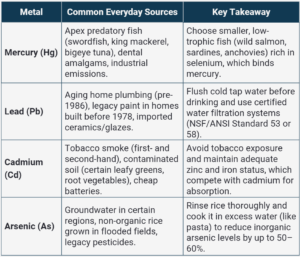
1. Primary Sources of Everyday Exposure
Heavy metals occur naturally in the earth’s crust, but modern industrialization, plumbing, and agriculture have increased our exposure. Knowing where metals commonly originate helps us make simple, proactive adjustments without stress.
2. The Science of Inborn Detoxification
Your body uses a three-phase system to process and eliminate toxic metals:
- Phase I (Functionalization): Cytochrome P450 enzymes in the liver begin breaking down fat-soluble toxins, generating reactive intermediate molecules.
- Phase II (Conjugation): Specialized enzymes attach water-soluble molecules— most notably glutathione—to these intermediates. This step neutralizes toxicity and makes the compound water-soluble.
- Phase III (Excretion): Cellular transport proteins (such as ABC transporters) move bound toxins into bile (for elimination via stool) or blood (for filtration via kidneys into urine).
The Crucial Role of Glutathione & Metallothioneins
- Glutathione (GSH): Often called the body’s “master antioxidant,” glutathione contains a sulfhydryl (–SH) group that binds tightly to heavy metals like mercury, lead, and cadmium, forming a stable complex that can be safely excreted.
- Metallothioneins (MTs): Small, cysteine-rich proteins produced in the liver and kidneys that sequester heavy metals, reducing cellular damage and regulating essential trace minerals like zinc and copper.
3. Four Evidence-Based Strategies to Support Elimination
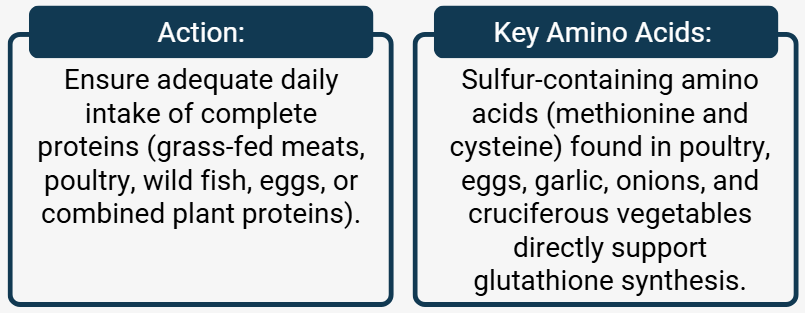
A. Adequate Dietary Protein
Glutathione is a tripeptide composed of three amino acids: cysteine, glycine, and glutamine. Without sufficient protein intake, the liver cannot synthesize enough glutathione or metallothioneins to keep up with metabolic demand.
B. Targeted Glutathione & Cofactor Support
To maintain robust glutathione recycling and phase II conjugation, key cofactors must be present:
- N-Acetylcysteine (NAC): The rate-limiting precursor for cellular glutathione synthesis.
- Selenium: Essential for glutathione peroxidase, the enzyme that neutralizes oxidative stress produced during heavy metal processing.
- Vitamin C & Vitamin E: Protect cell membranes from metal-induced lipid peroxidation and help regenerate reduced glutathione.
- Sulforaphane (from Broccoli Sprouts): A potent activator of the Nrf2 pathway, which upregulates genes responsible for producing innate antioxidant and detoxifying enzymes.
C. Hydration, Bowel Regularity & Soluble Fiber
Once the liver packages neutralized metals into bile, they enter the gastrointestinal tract. If digestion is sluggish, metals can be reabsorbed into circulation (enterohepatic recirculation).
- Optimal Hydration: Keeps kidney filtration smooth and supports urine output (a primary pathway for lead and cadmium excretion).
- Soluble Fiber: Diets rich in pectin (apples, citrus), psyllium husk, modified citrus pectin, and alginates act as intestinal binders, trapping heavy metals in the gut lumen so they leave via the stool.
D. Sweating & Circulation
Thermal therapy (such as infrared or traditional saunas) and moderate exercise increase circulation and promote sweating. Studies published in environmental health journals have demonstrated that trace levels of heavy metals—particularly cadmium, lead, and arsenic—are excreted through sweat glands.
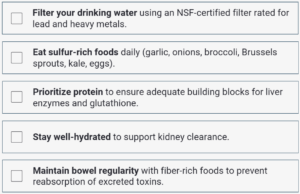
4. Practical Daily Checklist
Schedule a Peptide Consultation
Take the Next Step in Your Wellness Journey
At Lake Oswego Health Center, we believe in addressing root-cause environmental stressors with personalized, science-backed care. If you are interested in assessing your body’s burden of heavy metals or optimizing your innate detoxification pathways, our clinical team is here to support you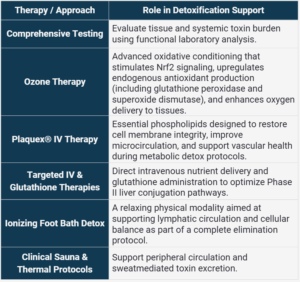
Related services: Ozone Therapy Treatments and Detoxification Suppo. Schedule a consultation.
